CTC-RI Annual Conference Official Landing Page
Welcome to CTC-RI's 2026 Annual Conference Official Landing page
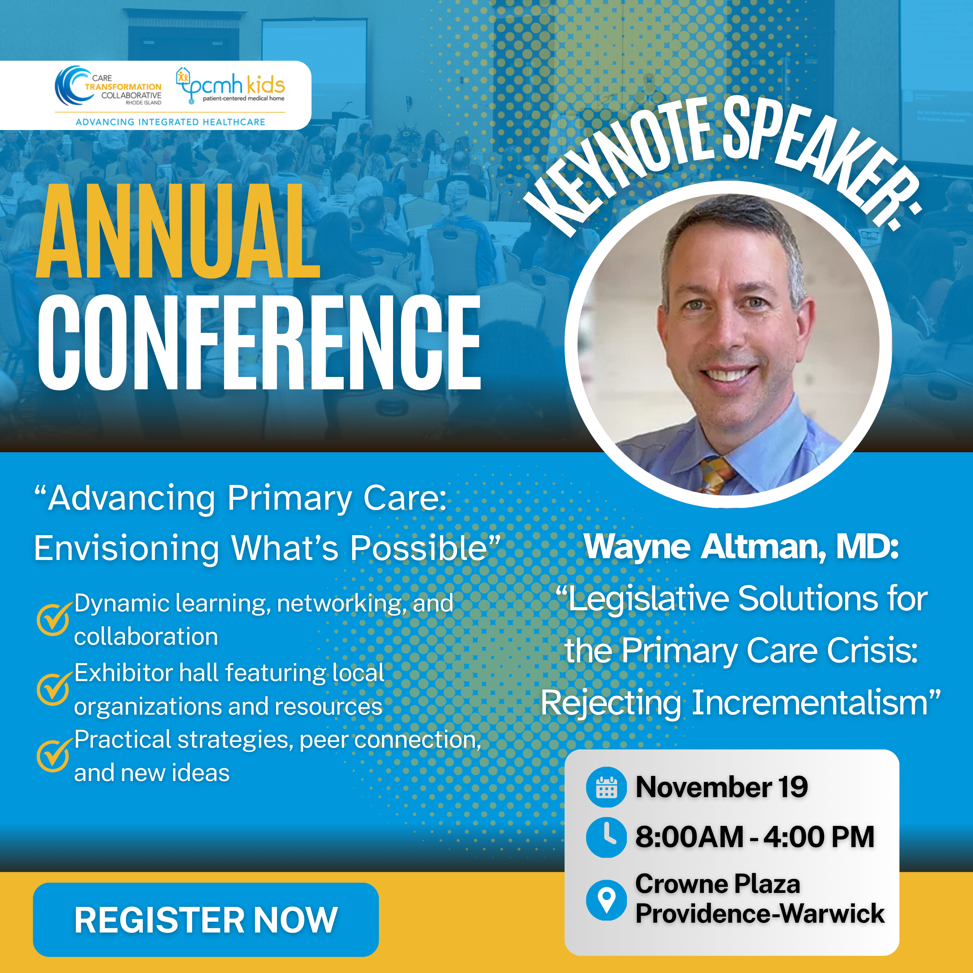
This in-person event will bring together health care professionals, community partners, and policy leaders for a day of dynamic learning, networking, and collaboration. Attendees will engage with timely topics including health equity, behavioral health integration, workforce challenges, population health, and technology, all aimed at strengthening Rhode Island’s primary care system. With an exhibitor hall featuring local organizations and resources, this conference offers practical strategies, peer connection, and new ideas to improve care across the state.

Keynote Description: Massachusetts primary care advocates have pursued something that once seemed politically unrealistic: landmark legislation to fundamentally change how the Commonwealth values, finances, delivers, and sustains primary care. This keynote will take participants inside that eight-year journey—from the early recognition that incremental fixes were insufficient, through coalition-building, policy development, political setbacks, persistence, and the remarkable progress that has brought Massachusetts to the brink of transformative primary care legislation. With the House and Senate now working to reconcile their respective approaches, the presentation will examine what is likely to happen next, what lessons can be learned from the journey, and—perhaps most importantly—what will still be missing. The goal is not simply to celebrate legislative progress, but to challenge conventional thinking about what is possible when primary care advocates reject incrementalism, build unlikely alliances, and pursue structural change. The Massachusetts experience offers both a roadmap and a cautionary tale for anyone seeking to transform primary care and create a health care system built around access, prevention, continuity, and the needs of patients and communities.
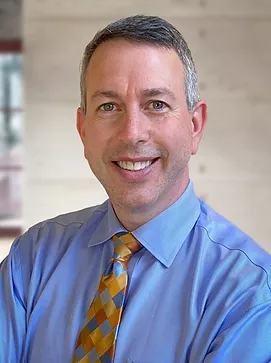 Wayne Altman, MD, President-Elect, Mass Academy of Family Physicians Founder, MA Primary Care Alliance for Patients (MAPCAP) Professor of Family Medicine and Community Health, UMass Chan Medical School, Founder, ABC Health Coalition
Dr. Wayne Altman served as the Jaharis Family Chair and Professor of Family Medicine at Tufts University School of Medicine for close to a decade. Dr. Altman received 35 teaching awards and citations during his 28years at Tufts. He has also been recognized as a Boston Top Doc 15 times. Dr. Altman’s research interests include health policy, wellness group visits, medical education, medical scribes, and vaccine hesitancy. Dr. Altman practices at Family Practice Group (FPG) in Arlington where he is President and co-owner of the practice. At FPG, Dr. Altman has co-led close to 100 Wellness Groups over 17 years. He is the Co-Founder of Wellness Campaign, a non-profit created to promote wellness in communities, as well as with patients and clinicians. Dr. Altman is the founder of MAPCAP (MA Primary Care Alliance for Patients) which advocates for health policy that features an emphasis on Social Determinants of Health, a prospective global payment for primary care, and the doubling of primary care investment. Dr. Altman cofounded Care That Matters, a multi-disciplinary group of health care professionals across the country advocating for pay for performance quality measures that are both patient-centered and evidence-based.
Dr. Altman is a Board member and President-Elect for the Massachusetts Academy of Family Physicians and serves as their Legislative Committee Chair. He was presented with the 2023 Advocacy Award by the Massachusetts Academy of Family Physicians.
Here you can see information on our sessions for this year, including links to slides and other documents related to each session.
Community Care Cooperative (C3) is an Accountable Care Organization governed by Federally Quality Health Centers (FQHCs). As C3 supports member health centers in the transition to value-based care, there is growing interest in developing and testing care models that move beyond the traditional 15-20 minute visit, regardless of patient need or complexity.
In this session, we will describe the design, implementation, and evaluation of two in-home primary care pilots at the Community Health Center of Cape Cod and Greater Lawrence Family Health Center. These pilots serve patients whose needs cannot be effectively addressed in traditional ambulatory settings due to a combination of medical fragility, chronic condition burden, physical disabilities, and behavioral health conditions.
We describe how we leveraged C3’s claims database to identify potential patients based on key utilization patterns and clinical indicators and designed a home-based primary care model tailored to the needs of this high-risk population.
Now two years into implementation, we will present early evidence of promising outcomes, including reductions in total cost of care, emergency department utilization, and inpatient utilization, along with compelling feedback from patient experience surveys. In addition to these costs and utilization trends and patient experience data, members of the in-home primary care team will share patient stories and insights into how individuals respond to the intervention, including factors that influence who benefits most from this model.
Finally, we’ll discuss key operational considerations, sustainability strategies, and how we’re integrating these learnings into ongoing health center clinical operations.
We plan to facilitate the session via a mix of a presentation, case study, and panel discussion. Our panel will while represent various voices and include in-home primary care clinicians, health center leadership, programmatic leads, and our program evaluation. We plan to leverage open discussion questions to the group to facilitate learning across organizations.
Presented by:
Kati Moran, Director, Primary Care Innovation, Community Care Cooperative (C3)
Amy Ledwell, Director, Value-Based Care Strategy, Greater Lawrence Family Health Center
Jonathan Lichkus, MD, Greater Lawrence Family Health Center
Alex Weiner, FNP-C, PMHNP-BC
Rayane Salerno, APRN, FNP-BC, Greater Lawrence Family Health Center
Crystal Adams, PhD, MPH, Senior Manager, Program Evaluation, Community Care Cooperative (C3)
Kati Moran, MPH is the Director of Primary Care Innovation at Community Care Cooperative (C3). In this role, she works with C3’s member FQHCs to strengthen primary care delivery and build the capabilities needed to succeed in value-based care. In this role, she partners with FQHCs to design, test, and scale innovative care models, advance care team redesign, and support practice transformation efforts that improve both patient outcomes and care team experience. Her work also includes exploring digital health solutions and technology-enabled approaches to improve access to care and support care team well-being. Prior to this role, she held other positions at C3 in the areas of Performance Improvement, Telehealth, and Quality. Kati holds a Bachelor of Science in Health Science and a Master of Public Health from Boston University.
Amy Ledwell is currently the Director of Value-Based Care Strategy for GLFHC. In her previous role as the former Executive Director of Feltin Community Care, she implemented and managed the home visit pilot program for GLFHC in collaboration with C3 and shepherded the transition of the program to GLFHC to build and expand the program more permanently inhouse.
Dr. Lichkus is a full-spectrum family physician and serves as the AVP, Quality and Clinical Integration for GLFHC. He oversees GLFHC’s quality improvement efforts and is helping lead their transformation to integrated, team-based care. He also serves as Co-Director for the Health System Management Curriculum at Lawrence Family Medicine Residency.
Alex Weiner, MPH, FNP-C, PMHNP-BC is a Family and Psychiatric Nurse Practitioner working at the intersection of primary care, psychiatry, and public health. He helped develop and lead a home-based primary care pilot program at the Community Health Center of Cape Cod focused on medically complex and homebound patients across Cape Cod. Alex also serves on the New Bedford Board of Health and is the founder of New Bedford Psychiatry & Wellness, a community-based psychiatric practice on the South Coast of Massachusetts.
This presentation introduces Optum Match, a new technology designed to improve patient-provider compatibility, an approach proven to strengthen relationships, increase patient retention, and advance health equity. This interactive session will highlight the research-driven foundation behind the product and its broader vision. Featuring perspectives from two physician speakers alongside the Founder of the Optum Match, the presentation will explore the importance of patient-provider alignment and its impact on care experiences and outcomes.
In addition, we will share insights derived from patient preference data and demonstrate how these insights are reshaping patient-provider relationships, enhancing care continuity, and revealing regional care trends. The combination of research findings and physician perspectives will illustrate how these insights can inform targeted provider upskilling, support more patient-centered care delivery, and guide strategic care delivery investments.
Presented by:
Melany Rabideau, DOL, MPH, LBBP
Dr. Conan Tu
Dr. Prakash Jayakumar
Melany Rabideau is an entrepreneurial healthcare executive and professor with eclectic experience serving in leadership roles supporting Fortune 5 companies, community-based health systems, and academic global health institutions. Proven strategic leader and systems thinker with a track record for radical transformation reversing underperforming operations through process design optimizing patient care valuing the patient-provider relationship. Subscribes to an equity agenda for ensuring accessible care across the continuum with an emphasis on primary care and keeping healthcare local.
Dr. Conan Tu graduated from CUNY Medical School (Formerly Sophie Davis School of Biomedical Education) in 1999 and received his MD from SUNY Upstate Medical School at Syracuse 2001. He completed his Internal Medicine Residency at Long Island Jewish Hospital in 2002 after which he joined his current medical group. Dr. Tu is double board certified in both Internal Medicine as well as Diabetology and practice in Bethpage, NY. In 2022, he earned his MBA in Healthcare Administration from Molloy University.
Dr. Prakash Jayakumar is Senior Medical Director and Head of Clinical Strategy & Intelligence at Optum Insight and a faculty member at Dell Medical School at The University of Texas at Austin. A surgeon-scientist and healthcare innovator, he specializes in advancing decision intelligence through artificial intelligence, data science, and patient-centered care models. With expertise spanning clinical strategy, healthcare innovation, and health policy, he has dedicated his career to improving healthcare decision-making, outcomes, and value for patients, clinicians, and healthcare organizations.
Over the past fifteen years, Rhode Island has become one of the nation's most experienced laboratories for value-based primary care. Primary care organizations have redesigned care teams, integrated behavioral health, expanded access, invested in population health capabilities, strengthened data and quality improvement infrastructure, and assumed greater accountability for quality, outcomes, patient experience, and total cost of care.
This session brings together physician and administrative leaders from four diverse Rhode Island primary care organizations to reflect on more than fifteen years of organizational transformation. The discussion will focus on the practical realities of implementing change, the investments that mattered most, the challenges that arose, and the lessons that can help shape Rhode Island's next generation of primary care.
The four participating primary care organizations represent a broad cross-section of Rhode Island's primary care landscape, including organizations serving pediatric, adult, family medicine, community health center, commercial, Medicaid, Medicare, and other patient populations. After brief presentations, the moderator will facilitate interactive conversation among panelists and the audience. The session will answer the question: After fifteen years of transforming primary care, what have we learned about building a stronger primary care system for Rhode Islanders of all ages?
Presented by:
This session will describe how Rhode Island Public Health Institute (RIPHI) and Open Door Health (ODH) translated implementation research into policy action to improve access to HIV prevention in Rhode Island. The presentation will outline the progression from data to implementation to policy, beginning with research findings that identified gaps in PrEP uptake and persistence, as well as the structural barriers that limited access in routine care. These barriers included cost, prior authorization requirements, limited access points, and fragmentation between clinical and pharmacy-based services. The session will then describe how these findings informed local implementation strategies and ultimately supported policy change at the state level.
The presentation will highlight the role of pharmacy access as an important strategy for expanding PrEP and PEP availability, particularly for individuals who may not regularly engage in primary care or specialty HIV prevention settings, such as Open Door Health, Rhode Island’s first and only dedicated LGBTQ+ community health clinic. It will also describe how Rhode Island Public Health Institute and Open Door Health used evidence generated through clinical and population-level work to support advocacy efforts aimed at reducing administrative and financial barriers. These efforts led to policy changes intended to improve access, reduce out-of-pocket costs, and streamline delivery through pharmacies and other care settings.
Importantly, two key partners from the state house will join the session to provide the legislative perspective on this work, the policy process, the key decision points that shaped the final legislation, and the considerations involved in moving from proposal to enactment. Including this perspective will help illustrate how research, clinical practice, public health leadership, and policymaking can align to produce meaningful systems-level change.
The session will be delivered as a formal presentation with slides, followed by dedicated time for questions and discussion. The session will emphasize a clear, evidence-informed narrative that connects research findings to practical implementation and policy outcomes. Attendees will leave with a better understanding of how local data can be used to inform advocacy, how cross-sector partnerships can support health policy change, and what lessons from the Rhode Island experience may be applicable to other settings seeking to expand equitable access to HIV prevention.
Presented by:
Amy Nunn, ScD, Chief Executive Officer, Rhode Island Public Health Institute/Open Door Health,
Brandon Potter, JD, Rhode Island House of Representatives, Rhode Island State Representative
Melissa Murray, AAS, Rhode Island Senate, Rhode Island State Senator
Philip Chan, MD, MS, Chief Medical Officer, Rhode Island Public Health Institute / Open Door Health
Dr. Nunn is the Chief Executive Officer at RIPHI. She is a passionate public health advocate best known for her innovative and effective solutions to our nation’s most pressing public health problems. Dr. Nunn holds masters and doctoral degrees in global health from the Harvard School of Public Health, and completed her post-doctoral fellowship at Brown University. Dr. Nunn is also a Professor of Public Health and Medicine at Brown University, and has trained hundreds of faculty members and students from around the world in how to create creative solutions to seemingly intractable public health problems. She has received many awards for her public health service and research over the last 15 years and has led highly effective advocacy campaigns locally and nationally. Her successful advocacy campaigns include, but aren’t limited to: PrEP for All in Rhode Island, which requires insurance companies to pay for HIV prevention medications without copayments and deductibles, and Eat Well Be Well, a SNAP incentive program that provides discounts for SNAP recipients when they buy fruits and vegetables with EBT cards. Dr. Nunn’s work has been covered by the New York Times, The Boston Globe, The Philadelphia Inquirer, PBS, National Public Radio, the BBC, and dozens of other media outlets. With a background in global health, she also wrote The Politics and History of AIDS Treatment in Brazil, which has been critically acclaimed by the Lancet and other major medical journals. Dr. Nunn is passionate about building highly effective, interdisciplinary teams who work together to build the scientific evidence base for public health solutions to seemingly intractable public health challenges. Her work has been elevated by her amazing team of public health leaders at RIPHI, and her community partners. Dr. Nunn is a vocal advocate for social justice, which was informed by her childhood growing up in Little Rock, Arkansas. She is an alumna of Little Rock Central High, forcibly integrated by the National Guard in 1957. Dr. Nunn loves to travel and has lived all over the world. One of her passions is studying foreign languages! She speaks fluent Spanish and Portuguese and is conversant in German and French.
Brandon Potter was first elected in 2020 to represent the people of District 16, which encomapasses the Garden City, Eden Park, and Stadium neighborhoods in Cranston. Representative Potter serves as Second Vice Chair of the House Health and Human Services Committee is a member of the House Corporations Committee and the House Labor Committee. In the 2025 legislative session, Representative Potter sponsored a new law that created a three-year pilot program prohibiting insurers from requiring prior authorization for medically necessary health care services ordered by patients' primary care providers. The pilot aims to remove a roadblock that slows down patient care and consumes hours of primary care providers' and their staffs' time each day. Representative Potter has also sponsored a new law requiring construction projects worth more than $10 million that receive state tax credits through the Rebuild RI or historic preservation programs to pay their construction workers the prevailing wage. He was the sponsor of legislation, later included in the state budget bill, seeking an investment of $250 million in school construction, which voters approved in 2022. He successfully sponsored legislation to increase transparency around affordable housing development, sponsored a law that permanently requires the state to analyze overdose deaths to help identify ways to reduce their prevalence, and sponsored a law to reduce the time health insurance companies are allowed to claw back payments to behavioral and mental health care providers. Representative Potter also cosponsored laws to increase paid time off to eight weeks, protect Rhode Islanders from annual and lifetime limits on health insurance benefits, require landlords to give tenants at least 90 days' notice before a rent increase, authorize a pilot program to prevent drug overdoses through the establishment of harm reduction centers, prohibit housing discrimination based on source of income, raise the minimum wage to $17 per hour by 2027, and increase the benefits provides by RI Works, the cash assistance and work-readiness program for low-income children and their families. Born August 6, 1984, he grew up in Cranston and went to Cranston West High School. He attended Community College of Rhode Island and graduated magna cum laude from Rhode Island College. He has nearly a decade of experience in the automobile industry, and graduated from Roger Williams University School of Law in May 2025.
Melissa Murray is a Democrat representing District 24 (Woonsocket, North Smithfield) in the Rhode Island Senate. The first openly LGBTQ+ elected official in Woonsocket, Sen. Murray served two terms on the Woonsocket City Council before being elected to the Rhode Island Senate in November 2018. During her time in the General Assembly, Sen. Murray has been active on a number of issues. She was the Senate sponsor of a $50,000 new tangible personal property tax exemption – which fully eliminates a significant financial burden for 75 percent of Rhode Island businesses, including all smaller businesses – as well as a law prohibiting rental application fees. She was also the Senate sponsor of new laws making HIV-prevention treatments free and accessible to qualifying patients; formalizing protections in state law against discrimination in health care; and requiring the state crime laboratory to conduct an audit of DNA samples in the databank to determine the number of DNA profiles that should have been entered in the databank but haven't been. She also introduced legislation to increase benefits paid to children and families in the Rhode Island Works program, a measure that was included in the approved budget. She has additionally sponsored legislation to cap the cost of insulin and diabetes testing supplies for Rhode Islanders with diabetes; allow Alcoholics Anonymous and Narcotics Anonymous to meet during a state of emergency; and improve restroom access for all genders. Sen. Murray was born on Oct. 3, 1974. Born and raised in northern Rhode Island, she attended Woonsocket's public schools. She has an A.A.S. in Criminal Justice with a focus in Forensic Science. A self-taught artist who travels locally, she also works at a family-owned business in Woonsocket. Sen. Murray is deeply involved in her community. She is involved with numerous boards and committees, including serving as Vice Chair of the Woonsocket Democratic City Committee.
Dr. Chan is Chief Medical Officer at Open Door Health. He is a board-certified physician who completed residency and fellowship at Brown University. Dr. Chan provides primary care, HIV/STI care and prevention, and HCV treatment at Open Door Health. He believes that health is a human right and that all persons deserve to be treated with compassion and kindness. Dr. Chan is also an Associate Professor in the Department of Medicine and School of Public Health at Brown University. He has led and currently leads multiple grants and programs at the intersection of research, public health, training and education, and LGBTQ+ health. He is co-chair of the statewide Rhode Island Hepatitis C Action Coalition (RIHAC) and the Governor’s Overdose Taskforce. Nationally, Dr. Chan serves on the Presidential Advisory Committee for HIV/AIDS (PACHA) and contributed to the CDC STI Treatment guidelines and the CDC DoxyPEP guidelines, among others. Dr. Chan’s goal is to continue to improve access to and provide affirming healthcare for people from all backgrounds.
Effective integration of community health workers in pediatric health care has transformative impacts on health outcomes by focusing on addressing key social drivers of health. Community health workers are public health professionals who have both lived experience and specific training to support health care navigation, creating connections between clinical work and communities. In Rhode Island, community health workers support treatment teams in a variety of settings including hospitals, primary care clinics, community-based organizations and schools. This workshop will include a lecture on the history of, current state of, and distinct skills, of community health workers in pediatric health care and highlight best practices of effective integration of pediatric health care through a multidisciplinary lens (clinical pediatrics, public health, and community health workers) followed by a facilitated work session with small group breakouts with common case scenarios that may benefit from team-based care and effective collaboration with community health workers.
Presented by:
Olutosin Ojugbele, MD MPH, Medical Director, Rhode Island Dept of Health, Pediatrician, Hasbro Children's
Swanette Salazar, CCHW, Community Health Worker, Family Service of Rhode Island
C. Paula Lewis-de los Angeles, MD, PhD, Pediatrician, Hasbro Children's
Olutosin “Tosin” Ojugbele MD MPH is the medical director of the divisions of community health and equity and environmental health at the Rhode Island Department of Health. She is an assistant professor of pediatrics at the Alpert Medical School at Brown University and practices primary care in the community. Prior to joining the Rhode Island Department of Health, she served as the director of the Fostering Health Clinic at Hasbro Children’s Hospital. Dr. Ojugbele completed her medical degree as well as an MPH in community health science at SUNY Downstate, pediatric residency at Northwell Health/Cohen Children’s Hospital and a post-doctoral fellowship in primary care research at Dartmouth Hitchcock.
Swanette Salazar, CCHW, is a trilingual Certified Community Health Worker and Lead CHW for the First Connections Program at Family Service of Rhode Island, where she supports pregnant women, foster youth, and families. She has built her career around advancing health equity and strengthening community-based systems of care. Swanette recently served as Rhode Island’s first CHW Ambassador with the National Association of Community Health Workers and as a Lead Consultant for the Rhode to Equity Initiative, helping advance CHW leadership and clinical-community partnerships. Her work has been recognized by the Governor of Rhode Island and honored with the 2024 Elizabeth Burke Bryant Hero Award. She continues to mentor CHWs, advocate for systemic change, and expand opportunities for community-driven health solutions.
C. Paula Lewis-de los Angeles, MD, PhD is a triple board-certified pediatrician and is an assistant professor of pediatrics on the clinician-educator track at the Alpert Medical School at Brown University. She currently practices as a general pediatrician in primary care and as an attending pediatrician at the Healthy Eating Active Living Through Hasbro (HEALTH) program. Dr. Lewis-de los Angeles graduated from the Brown Triple Board Residency, a combined program in Pediatrics, Psychiatry, and Child and Adolescent Psychiatry. Prior to that, she completed her combined MD, PhD at Northwestern University and her undergraduate studies at Stanford University.
Lifestyle medicine group visits are an innovative, patient-centered model of care that combine evidence-based lifestyle interventions with the power of peer support and interdisciplinary collaboration. This session will explore the development and implementation of healthy weight and lifestyle medicine group visits within rural, underserved, and community health center settings in Rhode Island. Presenters will share practical lessons learned from launching and sustaining these programs, including operational planning, team-based care design, patient engagement strategies, and workflow integration.
Participants will gain insight into the role of interdisciplinary teams in delivering lifestyle-focused care, strategies for navigating billing and reimbursement processes, and approaches to ensuring financial sustainability. The session will also examine the impact of group medical visits on patient outcomes, clinician satisfaction, and health system performance, highlighting how this model can improve access to care while addressing chronic disease prevention and management. Attendees will leave with actionable tools and real-world examples to support the implementation of lifestyle medicine group visits in their own practice settings.
Presented by:
Janelle Amoako, DNP, APRN-CNP
Nicole Siegert, MD
Janelle Amoako, DNP, APRN-CNP, is a family nurse practitioner, educator, mentor, and nursing workforce leader committed to advancing health equity and strengthening the nursing profession. She practices at Blackstone Valley Community Health Center, providing community-based care to culturally diverse and immigrant populations, with a particular commitment to addressing healthcare disparities and improving access to culturally responsive care.
Janelle holds a Doctor of Nursing Practice (DNP) and through her doctoral work, developed a passion for innovative approaches to primary care, particularly the implementation of the group medical visit model. She is interested in leveraging group-based care to promote patient engagement, health education, peer support, and improved health outcomes within primary care settings.
Janelle also serves as Program Coordinator for the Pathways to Nursing Program at the University of Rhode Island College of Nursing, where she supports students from underrepresented backgrounds through academic support, mentorship, professional development, and career advancement opportunities.
Her professional interests include health equity, community health, innovative models of primary care, nursing workforce development, leadership, and nursing advocacy. Across her clinical, academic, and community roles, Janelle is dedicated to creating meaningful connections between healthcare, education, and community to advance healthier and more equitable outcomes.
Dr. Nicole Siegert, MD, is a distinguished clinician-educator and Assistant Professor at the Warren Alpert Medical School of Brown University. With an extensive background in international medicine and patient safety, she specializes in full-spectrum family medicine, maternal and child health, and urgent care. She currently holds dual board certifications from the American Board of Family Medicine and the American Board of Lifestyle Medicine, reflecting a holistic and evidence-based approach to patient care.
Dr. Siegert’s academic journey began in Germany at the Eberhard-Karls University of Tübingen, where she earned both her Medical Doctor (MD) degree and a PhD focusing on incident reporting systems and patient safety. She later completed her residency training at Memorial Hospital of Rhode Island through Brown University. In her leadership experience, she has served as the Director of Maternal and Child Health for the Brown Family Medicine Residency and the Director of the Maternal Child Health Program at Women and Infants Hospital.
A dedicated educator, Dr. Siegert is a recurring recipient of the Dean’s Excellence in Teaching Award at Brown University and was named Faculty Teacher of the Year in 2015. Her clinical work spans several prominent healthcare systems in New England, including Atrius/ Optum, Care New England, Providence Community Health Center, and Blackstone Valley Community Health Center, where she provides urgent care and high-risk prenatal services as well as inpatient obstetrical and newborn care. Beyond the clinic, she is an active researcher and advocate, currently serving as an Alternate Delegate for the Rhode Island Chapter of the American Academy of Family Physicians (AAFP) and a member of the Advocacy Committee.
This presentation describes a collaborative, physician-led approach to integrating medical and behavioral health services for the treatment of substance use disorders (SUDs) within a primary care framework. The session will outline how structured collaboration between a medical provider and a Licensed Chemical Dependency Professional (LCDP) can support coordinated, patient-centered care.
Presenters will review workflows that support ongoing communication, shared clinical decision-making, and unified treatment planning. Key components include coordinated evaluation and diagnosis, integration of medication management with behavioral health interventions, and structured monitoring practices such as toxicology screening and progress tracking. The session will also highlight how evidence-based approaches- including Motivational Interviewing (MI), Cognitive Behavioral Therapy (CBT), Dialectical Behavior Therapy (DBT), and psychoeducation-can be effectively delivered within an integrated care model.
Case-based examples will be used to illustrate how this approach supports engagement, continuity of care, and responsiveness to patient needs across varying stages of readiness for change. Presenters will also discuss practical considerations for implementation, including role clarity, communication strategies, and maintaining efficiency within busy primary care settings.
This session is intended for primary care teams, behavioral health providers, and healthcare organizations seeking to strengthen integration efforts and improve coordination in substance use treatment.
Presented by:
Michael McCarten, MD, Chief Medical Officer, JA Health & Wellness
Mason Adams, CADC, LCDP, Clinician, JA Health & Wellness
A native of Cranston, Dr. McCarten is a 1983 graduate of the University of New England College of Osteopathic Medicine. Upon graduation, he was commissioned a Lieutenant in the United States Navy, beginning a 30-year career that led to travel to 24 countries on five continents. The highlights of Dr. McCarten’s career include serving as Senior Medical Officer aboard the aircraft carrier USS Theodore Roosevelt (CVN-71) at the time of the 9/11 attacks. His ship deployed to the North Arabian Sea one week later and remained in combat operations for the next five months. Dr. McCarten also served as the Commanding Officer of the NATO trauma hospital in Kandahar, Afghanistan, overseeing 500 US Navy, Army, Air Force and NATO medical personnel for a one-year period of intense combat operations. There the medical personnel recorded an historic 97 percent survival rate for combat casualties. Following retirement from the Navy in 2013, Dr. McCarten served as a family physician at the Elliot Health System in Manchester, New Hampshire, until 2021, was a Staff Family Physician at Wood River Health through 2023, and now serves as Chief Medical Officer of JA Health & Wellness a primary care and behavior health clinic with Justice Assistance in Cranston, RI.
Mason Adams is a Certified Alcohol and Drug Counselor (CADC) and Licensed Chemical Dependency Professional (LCDP) with nearly ten years of experience supporting individuals through life’s challenges. Specialties include addiction, anxiety, depression, loss, grief, and bereavement, stress management, and trauma. Mason provides individual therapy, group therapy, substance use treatment, and substance use evaluations. His approach is grounded in authenticity and connection. Mason is a Clinician at JA Health & Wellness, a primary care and behavioral health clinic of Justice Assistance in Cranston, RI.
This interactive session will explore Rhode Island’s ongoing Health Care System Planning process and the critical role it plays in shaping a stronger, more sustainable health care system for the future. Participants will gain an understanding of how health system planning informs policy, investment, workforce development, access to care, and the coordination of services across the state. The session will provide an overview of the planning framework being used by the Rhode Island Office of Health Care System Planning and highlight key priorities, challenges, and opportunities facing Rhode Island’s health care system.
Attendees will also actively contribute to the planning process by sharing their perspectives, experiences, and ideas. Through facilitated discussion and audience engagement, participants will provide input on the specific Health System Plan currently under development and help identify strategies to strengthen care delivery, improve health outcomes, and address emerging community needs. This collaborative session will invite participants to envision the future of Rhode Island’s health care system and contribute to a shared roadmap for transformation over the next ten years.
Presented by:
Marti Rosenberg, Director of Health Care System Planning for the Executive Office of Health and Human Services
Ana Novais, Assistant Secretary at the Executive Office of Health and Human Services.
Since September 2025, Marti Rosenberg has served as the Director of Health Care System Planning for the Executive Office of Health and Human Services, following her role as the Director of Policy, Planning, and Research from 2019 to 2025, and Project Director of Rhode Island’s State Innovation Model Test Grant (SIM), from 2015 to 2019. In her current role, Marti is leading the effort to create the state's first comprehensive health care system plan in 40 years and is helping to implement the Rural Health Transformation Program.
Prior to her state service, Marti led the Healthcare Initiative at The Providence Plan, through which she participated in the creation of HealthSource RI. Before that, Marti served as Development Director for USAction in Washington, DC, where she helped raise seed money for national advocacy leading to the passage of the Affordable Care Act. From 1996 to 2006, she led Ocean State Action, carrying out healthcare campaigns and grassroots policy advocacy at the Rhode Island State House, including for the passage of legislation creating the Office of the Health Insurance Commissioner, securing RIte Care expansions, and beginning Rhode Island's health care planning process.
Ana Novais holds a Clinical Psychology degree from UCLN, Belgium, and is a graduate of the NPHL Institute, University of Albany, NY. Ana’s career in Public Health started in 1985 (Cape Verde) and includes 5 years in Portugal.
In the US since 1995, Ana started working as a Clinical Psychologist before moving to the RI Department of Health in 1998 where she remained until 2020, first addressing the needs of RI BIPOC community and later leading the areas of Chronic Disease, Environmental Health, and Maternal and Child Health; Ana’s work include the development of nationally recognized programs such as “Vaccinate Before You Graduate” and “Health Equity Zones” initiative. In 2015 Ana was promoted to Deputy Director.
In 2020, after helping to lead Rhode Island’s COVID-19 crisis, Ana was promoted to Assistant Secretary at the Executive Office of Health and Human Services.
Ana was born and raised in Cabo Verde; a proud mother of 4 adult children and grandmother to 5 beautiful children. She loves spending time traveling, reading, and gardening.
Did you know that you can have type 1 diabetes and not take insulin? The paradigm around type 1 diabetes is shifting from diagnosis in crisis to diagnosis before the patient has symptoms of hyperglycemia. This session will provide general pediatricians with a practical overview of screening for pre-symptomatic type 1 diabetes. We will review the natural history of type 1 diabetes, the role of islet autoantibody testing, and current evidence supporting early identification of at-risk children. The session will also cover how and when to screen, how to counsel families about results, and emerging opportunities for monitoring and intervention to delay or prevent clinical disease onset. We will provide case studies of screening programs already underway in Rhode Island and provide a framework, and hopefully motivation, for general pediatricians so start screening their patients for pre-symptomatic type 1 diabetes.
Presented by:
Kate Millington, MD, Physician, Pediatric Endocrinology, Brown University Health
Gregory Fox, MD, Pediatrician, Pediatric Associates
Dr. Kate Millington is a board-certified pediatric endocrinologist and Assistant Professor of Pediatrics at the Warren Alpert Medical School of Brown University. She earned her MD from the Perelman School of Medicine at the University of Pennsylvania, followed by residency in pediatrics at the Boston Combined Residency Program (Boston Children’s Hospital and Boston Medical Center), and fellowship in Pediatric Endocrinology at Boston Children’s Hospital. Dr. Millington’s clinical and research work centers on the care of transgender and gender diverse youth and improving care and outcomes for youth with Type 1 diabetes. She is a passionate teacher and has mentored medical students, residents, and fellows in clinical research.
Dr. Fox received his undergraduate degree in economics from Cornell University, and his medical degree from the University of Cincinnati College of Medicine. He completed a residency in Pediatrics and a fellowship in Pediatric Endocrinology at Hasbro Children’s Hospital, and is board certified in both fields. He is currently pursuing his Masters of Public Health at Brown University. Dr. Fox has practiced general pediatrics and pediatric endocrinology at Pediatric Associates, Inc. since 2003. He is a board member for the Rhode Island Chapter of the American Academy of Pediatrics, and is the chair of their Advocacy and School Health subcommittees. He is the school physician for the Rhode Island League of Charter Schools, the City of Providence, and several specialty schools. He is the President and Medical Director of Camp Surefire, Rhode Island’s only summer camp for children with diabetes.
Black and Brown communities — including Cape Verdean and other immigrant populations across Rhode Island — carry disproportionate rates of childhood trauma, substance use disorders, and untreated mental health conditions. Yet these are the communities least likely to seek help from traditional primary care and behavioral health systems. The barrier is rarely a lack of need. It is a profound lack of trust — shaped by cultural silence, generational shame, language barriers, and systems that were never designed with these communities in mind.
What the chart doesn't say is often the most important part of the story. And primary care providers see it every day — the patient who minimizes, the mother who deflects, the woman who smiles and says everything is fine while carrying decades of unspoken pain. This session is about learning to hear what is not being said, and understanding why.
This session brings two first-generation Cape Verdean American women to the front of the room — one a primary care physician, one a trauma survivor and community wellness advocate in long-term recovery — to offer primary care teams a rare, inside view of what it actually takes to reach and serve patients from immigrant and BIPOC communities.
Dr. Elizabeth Gomes, DO, a trilingual family medicine physician and OB/GYN fluent in English, Spanish, and Cape Verdean Creole, brings the clinical lens. Practicing at WTL Health, a free community clinic in Pawtucket serving low-income families regardless of their ability to pay, Dr. Gomes knows firsthand the barriers her patients face in disclosing trauma, substance use, and mental health challenges — and what it takes to build the kind of trust that makes honest conversations possible.
Carlene Fonseca, founder and CEO of The Greatest You Consulting, brings the lived lens. As a survivor of childhood sexual and emotional abuse, a woman in long-term recovery who used substances during pregnancy, and a single mother actively breaking generational cycles of trauma in the same Central Falls community where she grew up, Carlene offers primary care providers something no clinical training can replicate — the perspective of the patient who almost never told the truth in the exam room, and what finally made her feel safe enough to do so.
Together, they represent what truly integrated, culturally responsive, whole-person care looks like when community voice and clinical expertise are in the room at the same time. Participants will examine the cultural dynamics that create barriers to disclosure in Cape Verdean and immigrant families, explore practical trauma-informed communication strategies for use in primary care settings, and discuss how free and community-based clinic models like WTL Health are closing the gap between underserved communities and the care they deserve.
This is not a theoretical conversation about health equity. It is a real one — told by two Cape Verdean women, two single mothers, and two people who have seen this crisis from both sides of the exam room table.
Presented by:
Dr. Elizabeth Gomes, DO, Medical Director, WTL Health
Carlene Fonseca, MA, CEO/Founder, The Greatest You Consulting
Dr. Elizabeth M. Gomes, DO, is a board-certified family medicine physician and OB/GYN with over 16 years of experience serving Rhode Island communities. She is a physician at WTL Health, a free community health clinic in Pawtucket, Rhode Island, committed to providing quality healthcare with compassion and dignity for all individuals regardless of their financial situation. Her work encompasses primary care, women's health, vaccinations, chronic disease management, and community health outreach in partnership with churches and community-based organizations — with a focus on addressing social determinants of health. She graduated from Ohio University College of Osteopathic Medicine in 2010 and is affiliated with Women and Infants Hospital of Rhode Island. As a first-generation Cape Verdean American and trilingual physician fluent in English, Spanish, and Cape Verdean Creole, Dr. Gomes has dedicated her career to serving immigrant, BIPOC, and low-income families who have historically faced the greatest barriers to quality care. She brings both clinical expertise and deep cultural understanding to every patient encounter — and as a single mother, she carries a personal commitment to the families and communities she serves every day.
Carlene Fonseca is the founder and CEO of The Greatest You Consulting, a trauma-informed wellness firm consulting across Rhode Island. A first-generation Cape Verdean American, survivor of childhood sexual and emotional abuse, and woman in long-term recovery, Carlene has transformed her lived experience into a powerful platform for healing, advocacy, and community change. Carlene serves as Co-Chair of the SUMH Taskforce of the Pawtucket-Central Falls Health Equity Zone, where she focuses on empowering community members in anti-stigma education and Narcan distribution. She is a faculty member at College Unbound, where she teaches non-traditional learners for five years, and currently teaches at the ACI Prison — bringing healing and dignity to incarcerated individuals. She speaks at the Rhode Island State House on health and recovery policy, writes for The Valley Breeze, and has shared her story on the TEDx stage and across multiple podcast platforms. Her work centers on the 8 Dimensions of Wellness, which she delivers through workshops for caregivers, behavioral health staff, and communities across Rhode Island. As a single mother actively breaking generational cycles of trauma, Carlene brings both professional expertise and personal truth to every room she enters. She holds a BA in Government from Georgetown University, an MA in Criminology from George Washington University, and is currently pursuing her Master's in Clinical Mental Health Counseling at Rhode Island College — driven by a commitment to increasing the number of licensed, culturally competent mental health professionals serving Black and Brown communities in Rhode Island.
Interested in becoming a sponsor? Check out our Sponsorship Packages HERE. Email Michelle Mooney, MPA, mmooney@ctc-ri.org for assistance.
Platinum
Blue Cross Blue Shield of Rhode Island
Neighborhood Health Plan of Rhode Island
Point32Health
Rhode Island Department of Health
UnitedHealthcare Community & State
Gold
Astrana Health
Health Helper
Take Note Sponsor
CODAC Behavioral Healthcare

Silver
Breakwater Health
Family Service of Rhode Island
HealthSource RI
RI Health Center Association
RIPIN
University of Rhode Island, College of Health Sciences
University of Rhode Island, College of Nursing
University of Rhode Island, College of Pharmacy
URI, Rhode Island Geriatric Education Center (RIGEC)
- Advance-CTR
- Alzheimer's Association RI Chapter
- American Heart Association
- Astrana Health
- Blue Cross Blue Shield
- Breakwater Primary Care
- Commission for Health Advocacy an... (name cut off)
- Community Care Alliance
- Family Service of Rhode Island
- Gateway Healthcare
- Green and Healthy Homes RI
- Healthcentric Advisors
- Health Helper
- Justice Assistance
- KIDSNET/RICAIR, RI Department of... (name cut off)
- Neighborhood Health Plan
- Newport Mental Health
- Optum Match
- OSCIL
Learn More on how to join us as a CTC-RI Annual Conference Exhibitor HERE!
- PediPRN
- PSI RI Chapter
- Rhode Island HIE
- RI Department of Health - Health Equ... (name cut off)
- RI Department of Health MomsPRN
- RI Department of Health Tobacco Ce... (name cut off)
- RI Elder Info
- RI Meals on Wheels
- RI Public Health Institute/Open Door... (name cut off)
- RIPIN
- Salve Regina University
- The Alliance for Community Health... (name cut off)
- The Autism Project
- The Foundation for Integrated Care
- The Village Common of Rhode Island
- United HealthCare
- University of Rhode Island CHS
- University of Rhode Island Pharmacy... (name cut off)
- URI GEC
Come back to learn more about how to access CME/CEU
AAFP Prescribed credit is accepted by the American Medical Association as equivalent to AMA PRA Category 1 CreditTM toward the AMA Physician's Recognition Award. When applying for the AMA PRA, Prescribed credit earned must be reported as Prescribed credit, not as AMA PRA Category 1TM.
AAFP credit is accepted by many organizations. Please follow up with your specific organization as to how you should report the credit earned. To view AAFP equivalancy agreements, please check out their website: https://www.aafp.org/cme/credit-system/credit-statements/agreements.html
To view 2025 Conference Content, Click HERE
Our Mission
The mission of CTC-RI is to support the continuing transformation of primary care in Rhode Island as the foundation of an ever-improving integrated, accessible, affordable, and equitable health care system. CTC-RI brings together critical stakeholders to implement, evaluate and spread effective multi-payer models to deliver, pay for and sustain high-quality, comprehensive, accountable primary care.